See all > Business solutions


Closing the Gap Between Access and Outcomes in Women’s Health
Women’s health is often framed as a niche category, something separate from “core” healthcare needs. But the reality is much broader. Women are overrepresented across many different major health concerns, from chronic disease and mental health to cardiovascular conditions and autoimmune disorders. However, women are consistently less likely to receive timely, accurate, and appropriate care.
For employers, the question is not whether women’s health is a specialized benefit. It is whether a large portion of their workforce can access care that actually works for them.
When women struggle to get diagnosed, treated, or supported, the impact shows up quickly in missed work, reduced productivity, higher turnover, and a benefits experience employees don’t trust or fully use.
Nearly eight in ten Canadian women say proactive care is a priority, yet women remain more likely than men to delay seeking medical advice, even when they have concerns. That delay is not driven by lack of awareness. It is driven by access barriers and past experiences with a system that too often dismisses symptoms, minimizes concerns, or applies diagnostic models that were never designed with women in mind.
The result is a persistent gap between intention and outcomes. Manageable health issues escalate into larger disruptions, not because women wait too long to care, but because the system makes it difficult to act early and confidently.
The care gap is structural, not behavioural
More than half of Canadian women say the healthcare system has not met their needs. Long wait times, fragmented care pathways, and difficulty accessing specialists leave many women managing symptoms on their own. Our research shows that 82 percent of women turn to Google to research serious symptoms instead of consulting with a healthcare professional.
This behaviour is often mischaracterized as avoidance, but it reflects something else entirely: women want to be proactive, but reliable pathways to care are missing. Without continuity or follow-through, self-navigation becomes the default, increasing the risk of delayed diagnosis and poorer outcomes.
These challenges show up across the full spectrum of women’s health, not just in areas traditionally labeled “women-specific,” including:
- Prolonged diagnostic delays for reproductive and pelvic health conditions, including an average five-year wait for an endometriosis diagnosis in Canada
- Cardiovascular risk that is often underrecognized in younger women, despite heart disease being a leading cause of death
- Mental health concerns that frequently intersect with hormonal changes, caregiving responsibilities, and chronic stress, yet are often treated in isolation
- Neurodivergence, where diagnostic criteria have historically emphasized hyperactive presentations of ADHD, contributing to decades of underdiagnosis among women whose symptoms are more likely to be inattentive or internalized
Across these conditions, a common pattern emerges. “Standard” symptoms and diagnostic pathways fail to account for how illness presents differently in women. As a result, women spend longer periods undiagnosed or misdiagnosed, compounding both health and life impacts over time.
What this means for employers
The cost of delayed and fragmented care is not abstract. In our 2025 study, 70 percent of women aged 18 to 34 and 73 percent of women aged 35 to 54 reported missing work due to health issues. More than half said they missed work specifically because they could not address a health concern sooner.
This is why women’s health cannot be reduced to fertility benefits or menopause programs alone. Women’s health spans every category of care, and when systems are not designed to recognize that, employers absorb the downstream effects through absenteeism, burnout, and disengagement.
The opportunity lies not in adding more point solutions, but in removing friction. Earlier intervention, continuity of care, and access to clinicians who take the time to understand the individual can prevent escalation and support sustained wellbeing. Preventative care also delivers strong economic returns, with estimates suggesting that every dollar invested can save fourteen dollars in future health system and economic costs.
What a better model of women’s health looks like
A modern approach to women’s health starts with proactive, personalized care rather than reactive, episodic visits. It recognizes that risk profiles, symptoms, and needs evolve across life stages and that care models must adapt accordingly. Regular, personalized check-ins help surface concerns early, while continuity ensures those concerns are not lost between appointments.
Equally important is access to specialists. Other data from 2025 indicates, 58 percent of women reported they could not access specialist care when they needed it. In-person specialist wait times in Canada can exceed 30 weeks, delaying diagnosis and prolonging uncertainty. Without timely specialty access, proactive care loses its impact.
Effective women’s health strategies prioritize areas with the greatest opportunity for prevention and early detection, including cervical and breast cancer screening, osteoporosis risk, cardiovascular disease, menopause and perimenopause, and reproductive health concerns. But the common thread is not the condition itself. It is whether women can move through the system without repeated barriers, dismissal, or delay.
How support can start to close the gap
While many of these challenges are systemic, access-oriented models can help reduce friction and improve follow-through. Through Maple, employees can access primary care and proactive health check-ins quicker, helping address gaps that exist in the broader system. Recognizing women’s unique needs, Maple is also investing in tailored care, starting with Beyond ADHD, designed for how ADHD can present differently in women and delivered by providers trained to provide the right support over time.
Technology plays a supporting role in this model by improving continuity rather than replacing clinicians. Streamlined intake, better information flow, and structured follow-up help ensure care does not end after a single appointment. Women consistently report valuing tools that reduce wait times, improve access, and enable earlier diagnosis, particularly when those tools are paired with human care and clinical judgment.
The takeaway for employers
Women’s health is not a niche benefit. It is foundational to workforce resilience and performance. When care models fail to recognize how women experience illness, risk, and diagnosis differently, the consequences ripple far beyond healthcare utilization.
Strategies that prioritize real access, real continuity, and real understanding can help close the gap between intention and outcomes. By supporting proactive, preventative care and timely access to specialists, employers can help women address health concerns earlier, stay engaged at work, and feel supported across every stage of life.
Trusted by millions of Canadians
Get started now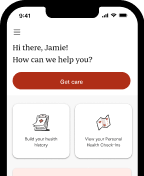
Transform your business by partnering with us
Shorten recovery times, lower costs and improve health outcomes with virtual care solutions that are personalized to your business needs.
Learn moreDo you need medical care today?
Trusted, experienced doctors and nurse practitioners are ready to see you.
